
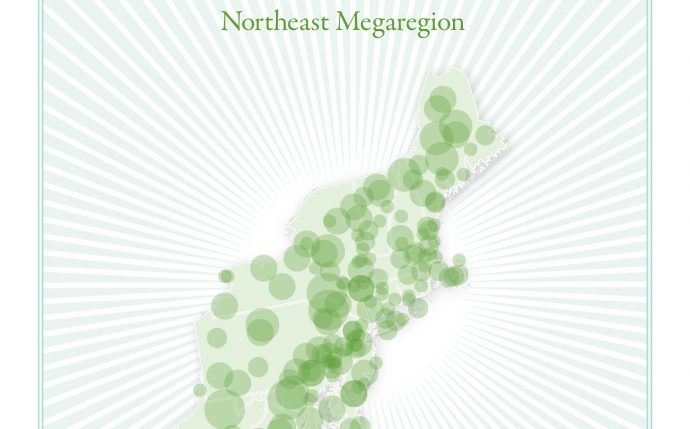
Landscapes: Improving Conservation Practice in the Northeast Megaregion
Buying land isn’t enough. Building parks won’t get it done. Restoring forests and wetlands by themselves is not an answer. Successful conservation requires a compre- hensive, regional approach.
Landscape conservation means looking beyond property boundaries and political jurisdictions. A holistic perspective is vital
for managing watersheds and habitats and addressing long-term issues such as climate change. With funding scarce, it’s also crucial to build partnerships that can set mutual priorities, share resources and collaborate e ectively. As the population grows and development expands, conservation needs to help shape – and not simply react to – deci- sions about land use and urban infrastructure.
is is especially true for complex geogra- phies like the 13-state Northeast megaregion. is densely developed area – stretching from Maine to West Virginia – is now home to about 72 million people. Its cities, suburbs and rural areas are expected to add an addi- tional 15 million people by the year 2040. Where these people are housed, and how their transportation and energy needs are met, will dictate whether the region’s wildlife, drinking water and other resources, farms and forests, and outdoor recreational opportuni- ties are truly lasting.