
Making the Invisible Visible:
The strategic role, leadership, & practice of collaborative coordination
A 2026 Article Series
Collaborative work doesn’t simply emerge or endure on its own. It relies on a range of enabling conditions, including the often-overlooked role of skillful coordination and collaborative leadership, which serves as the connective tissue binding together diverse partners, priorities, and efforts. Central to many landscape-scale collaboratives, this role(s) holds relationships, facilitates dialogue, navigates conflict, sustains momentum, and helps partners move from aspiration to action. Yet despite its pivotal nature—and the sophisticated blend of strategic, administrative, relational, and emotional labor it demands—collaborative coordination remains insufficiently recognized in both research and practice. Even the commonly used title “coordinator” itself reinforces this gap in understanding, often suggesting a narrow or primarily administrative function. In doing so, this inadvertently diminishes how the role is perceived, supported, and ultimately valued within collaborative stewardship efforts.
In this context, we are launching a series of articles that aims to more fully capture and reflect the nature of the coordination role, and necessary supporting capacities, for collaboratives working to advance landscape outcomes across the United States—and beyond. The reflections and insights in this series emerge at a moment of growing momentum within the collaborative stewardship and conservation field—one marked by an increasing recognition of the need for expanded peer exchange, intentional skill-building, and more robust professional development pathways for those working in coordination roles. This shift signals an important turning point: a collective acknowledgment that the success of collaborative efforts depends not only on shared goals, but on the often-invisible work required to sustain them.
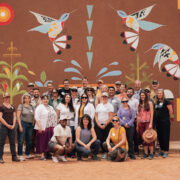
Article 1: The Role Every Collaborative Relies On, and Too Few Understand
August 2026
In this first article, we seek to better define the role of landscape collaborative coordination, outlining a set of four core responsibilities–and representative tasks within each responsibility–that we feel are essential to this complex, challenging, and critically important work.
Read the article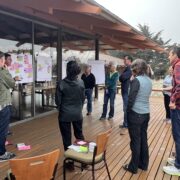
Article 2: Recognizing Collaborative Coordination as a Strategic Leadership Role
October 2026
In this second article, we examine coordination as a form of strategic leadership, distinguishing between administrative and leadership-oriented coordination functions. We outline practical ways collaboratives can better define, support, resource, and recognize the role so that responsibilities, authority, and expectations are aligned with what effective coordination actually requires.
Read the article
Article 3: Holding the Whole: The Inner Work of Collaborative Coordination (working title)
Forthcoming, November 2026
In this third article, we will explore what those in coordination roles draw on internally to navigate the complexity of collaborative work, including relational awareness, presence, and the ability to stay grounded and responsive amid conflict and uncertainty. We also look at how collaboratives can create the conditions and resources for those in coordination roles to build and sustain these qualities over time.
We write first and foremost for those of you in coordination roles who rarely see your work fully understood, accurately described, or meaningfully recognized—despite the critical role you play. At the same time, we write for funders, researchers, organizational leaders, and decision-makers whose priorities and investments directly shape the conditions under which collaborative work can thrive or falter.
Ultimately, we offer this series as a call to reframe and elevate how collaborative coordination is understood. Far from being limited to administrative support, meeting management, or facilitation alone, this work represents a sophisticated and indispensable form of collaborative leadership. It involves strategic thinking, relationship stewardship, adaptive problem-solving, and sustained attention to the human dimensions of collective action. Recognizing coordination in this way is essential—not only for valuing the people who do this work, but for strengthening the long-term effectiveness and resilience of collaborative stewardship efforts themselves.
As authors, we collectively bring decades of experience supporting collaborative processes through both investigating capacity needs for working in collaboration, and doing the actual work of collaborative coordination that navigates the realities of dynamic multi-stakeholder We have had the privilege of working alongside—and learning from—hundreds of different landscape stewardship collaboratives and the individuals working to build, lead, and steward them. We bring this depth of experience to this series, and in doing so will explore the role of coordination, the strategic capacities practitioners bring to collaborative systems, the internal capacities required to sustain this work, and finally, the lived experiences of coordinators themselves through reflective narratives and visual storytelling.
About the Authors:

Jaimie Baxter
Program Specialist, Whatcom County Natural Resources Division
Jaimie Baxter is a Program Specialist with Whatcom County’s Natural Resources Division, where she leads strategic communications, public engagement, and cross-sector collaboration on watershed, floodplain, and natural resource initiatives. She previously developed a collaborative capacity grant program to strengthen forest partnerships across the United States and has recently conducted research on the conditions that enable effective collaboration. Her work focuses on helping people navigate complexity, build trust across differences, and create durable partnerships to address environmental challenges.

Sharon Farrell
Strategic Advisor, The Stewardship Network
Sharon Farrell is an independent consultant, and Strategic Advisor with the Stewardship Network focusing on strategic planning; partnership development, diagnostics, and sustainability; landscape scale stewardship and conservation, and collaborative capacity projects and programs nationwide. The former Executive Vice President of Projects, Stewardship and Science with the Golden Gate National Parks Conservancy, Sharon has worked for more than 40 years as an ecologist, park and community planner and project manager. She has a background in vegetation management, restoration ecology, and landscape-scale natural resources planning. Sharon’s ecological and partnership expertise has contributed to landscape-scale stewardship and conservation partnerships spanning regional to global scales – One Tam in Marin County, the Golden Gate Biosphere Network, the California Landscape Stewardship Network, the Network for Landscape Conservation, and the Global Landscape Stewards. Examples of some of her work include: The Collaborative Stewardship Toolkit; Do More, Better, Together; Investing in Collaborative Models and Their Capacities: An Evaluation of the National Fish and Wildlife Foundation’s Innovative Sediment and Nutrient Reduction Grants Program; Increasing collaborative capacity and infrastructure for landscape stewardship, and Ecological Health Assessments Process Guide.

Devin Landry
Network Manager, California Landscape Stewardship Network

Jonathan Peterson
Director, Network for Landscape Conservation
Jon has been with the Network since 2016, and stepped into the Director role in 2023. Jon brings to NLC 20 years’ experience in working to advance collaborative landscape conservation and stewardship. Prior to joining the Network he coordinated the South Mountain Partnership, a regional landscape conservation initiative in south-central Pennsylvania, and spent three years on the staff of the Boston-based Kendall Foundation. He is also a senior fellow of the Environmental Leadership Program. A graduate of Middlebury College and the Yale School of Forestry and Environmental Studies, Jon lives in western Massachusetts with his wife and their two little ones. Too much of his work is done in front of a computer, and he embraces any opportunity to get away from a screen—especially if the escape is on two wheels or, when the snow is good, skis.

Aireona Raschke
Associate Director of Practice, Center for Collaborative Conservation at Colorado State University
Aireona Bonnie Raschke, Ph.D. (she/they) is a political ecologist and conservation practitioner who is currently immersed in the study and practice of collaborative conservation. She is the Associate Director of Practice for the Center for Collaborative Conservation (CCC) of Colorado State University. In this position, she is spear-heading efforts to build out CCC’s program to support conservation work on-the-ground and connect practitioners with academic researchers, and directing the Western Collaborative Conservation Network. Previous to this, Aireona was the Program Director for the Central Arizona Conservation Alliance, where she led collaborative efforts to conserve and restore a regional network of Sonoran Desert habitats across the Phoenix-metro area and Maricopa County. She did her post-doc with Arizona State University’s (ASU) and Chemonic’s Conservation Solutions Lab, studying the involvement of local people in community-based conservation efforts across the globe. She earned her Ph.D. and M.S. as a member of the 4E Lab within ASU’s Center for Biology and Society, where she studied the impacts of nature-based tourism on local communities and environments in the Caribbean. Aireona is an avid hiker, bird-mom, and artist who runs a travel blog in her spare time and generally loves exploring the world in all its facets.